

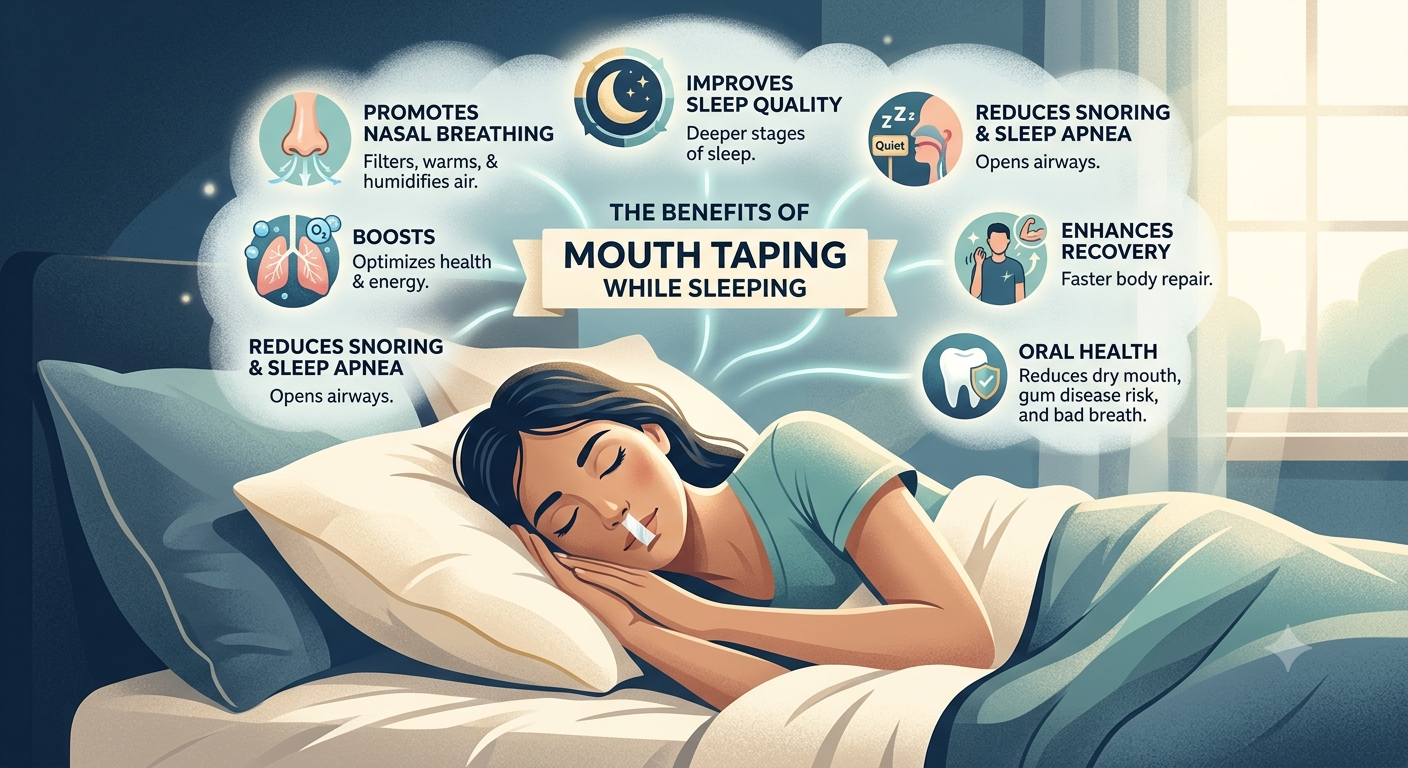
The benefits of mouth taping while sleeping have become a popular topic among people looking for better sleep, less snoring, and healthier breathing habits. The idea is simple: a small piece of gentle tape is placed over the lips before bed to encourage nasal breathing instead of mouth breathing. Supporters say it helps them wake up with less dry mouth, fresher breath, and more restful sleep. However, mouth taping is not suitable for everyone, especially people with nasal blockage, breathing problems, or untreated sleep apnea. Health sources also warn that it may cause discomfort, skin irritation, or breathing difficulty in some people.
The Benefits of Mouth Taping While Sleeping
Mouth taping is mainly used to encourage breathing through the nose during sleep. Nasal breathing is often considered more natural and efficient because the nose filters, warms, and humidifies the air before it reaches the lungs. When someone sleeps with their mouth open, they may wake up with a dry throat, cracked lips, bad breath, or a heavy feeling in the mouth. For people who naturally mouth-breathe at night but can breathe clearly through their nose, mouth taping may help build a stronger habit of nasal breathing.
One of the biggest reasons people try mouth taping is to reduce dry mouth. Sleeping with an open mouth allows moisture to escape for hours. This can leave the mouth feeling sticky and uncomfortable in the morning. Dry mouth can also contribute to bad breath because saliva helps wash away bacteria. By gently keeping the lips closed, mouth taping may help some sleepers maintain more moisture in the mouth overnight.
Another possible benefit is reduced mild snoring. Snoring can happen for many reasons, including sleep position, nasal congestion, alcohol use, weight, or airway obstruction. In some mouth breathers, an open mouth may make snoring worse. A small study found that mouth taping improved snoring and sleep apnea severity in some people with mild obstructive sleep apnea, but the research was limited and should not be treated as proof that mouth taping works for everyone.
Mouth taping may also help some people wake up feeling fresher. When the mouth stays closed, the throat may feel less dry, the tongue may feel less coated, and morning breath may be less noticeable. This does not mean mouth taping replaces brushing, flossing, tongue cleaning, or dental care. It simply means that better overnight moisture may support a cleaner feeling in the morning.
Some people also use mouth taping as part of a larger sleep routine. A consistent bedtime, a cool room, reduced screen time, and a calm breathing pattern can all improve sleep quality. Mouth taping alone is not a magic solution, but for the right person, it may act as a small reminder to breathe through the nose and relax before sleep.
How Mouth Taping Supports Nasal Breathing
Nasal breathing has several natural advantages. The nose is designed to manage airflow before it enters the body. It traps dust and allergens, adds moisture to dry air, and helps regulate breathing rhythm. Mouth breathing, especially during sleep, can feel harsher on the throat and may lead to dryness.
When a person uses mouth tape, the goal is not to force the body into an unsafe position. The goal is to gently encourage the lips to stay closed. This is why breathable, skin-safe tape made for sleep is usually preferred over strong household tape. The tape should never make a person feel trapped, panicked, or unable to breathe.
People who benefit most are usually those who can already breathe comfortably through their nose while awake. If the nose feels blocked at night because of allergies, sinus issues, a deviated septum, or congestion, taping the mouth can make breathing harder. In that case, the better solution is to treat the nasal problem first rather than covering the mouth.
Possible Benefits for Oral Health
Mouth breathing can affect oral comfort. When the mouth dries out overnight, saliva levels drop. Saliva is important because it helps protect the teeth and gums, supports a balanced oral environment, and reduces odor-causing bacteria. Less saliva can mean more morning breath and a higher chance of waking up with a sore or dry mouth.
Mouth taping may help some people keep the mouth closed and reduce dryness. This can support better comfort, especially for people who often wake up needing water. However, it is not a dental treatment. Anyone with ongoing dry mouth, gum problems, cavities, or bad breath should speak with a dentist to find the real cause.
Can Mouth Taping Improve Sleep Quality?
Some users report deeper sleep after mouth taping, but the evidence is still limited. Sleep quality depends on many factors, including stress, bedroom environment, sleep schedule, hormones, caffeine, medications, and breathing health. Mouth taping may help if mouth breathing is one small reason someone wakes up frequently.
That said, it should not be used to ignore serious symptoms. Loud snoring, gasping during sleep, morning headaches, daytime sleepiness, and pauses in breathing can be signs of sleep apnea. Experts warn that people with untreated sleep apnea or breathing difficulty should avoid mouth taping unless a medical professional says it is safe.
Who Should Avoid Mouth Taping?
Mouth taping is not for everyone. People should avoid it if they have blocked nasal passages, severe allergies, asthma flare-ups, breathing problems, panic around restricted breathing, nausea, heavy alcohol use before bed, or suspected sleep apnea. Children should not use mouth tape unless a qualified healthcare provider recommends it.
It is also important to stop immediately if the tape causes anxiety, skin irritation, poor sleep, trouble breathing, or discomfort. Sleep should feel calm and safe. If taping makes bedtime stressful, it is not the right option.
A safer first step may be improving nasal airflow. This can include using a humidifier, treating allergies, trying nasal strips, sleeping on the side, avoiding alcohol close to bedtime, and keeping a consistent sleep schedule. For snoring or suspected sleep apnea, a sleep test or medical evaluation is a smarter choice than trying to solve the issue alone.
How to Try Mouth Taping Safely
Anyone considering mouth taping should start carefully. Test the tape during the day for a few minutes while sitting calmly. Make sure the nose feels clear and breathing feels easy. Use only gentle, skin-safe tape designed for this purpose. Do not use duct tape, packing tape, or anything too strong for facial skin.
A small vertical strip in the center of the lips may feel less restrictive than covering the entire mouth. The tape should be easy to remove. If there is any discomfort, shortness of breath, or panic, remove it right away.
It is also wise to speak with a doctor or dentist before making mouth taping part of a nightly routine, especially if snoring, poor sleep, or dry mouth happens often. These symptoms may have an underlying cause that needs proper care.
Final Thoughts
The benefits of mouth taping while sleeping may include better nasal breathing, less dry mouth, fresher morning breath, and possibly reduced mild snoring for some people. Still, it is not a cure for sleep problems and it is not safe for everyone. The best approach is to understand why mouth breathing is happening in the first place. When used carefully by someone who can breathe clearly through the nose, mouth taping may be a helpful part of a healthy sleep routine. But if there are signs of sleep apnea, nasal blockage, or breathing difficulty, medical advice should come first.














Leave a comment