

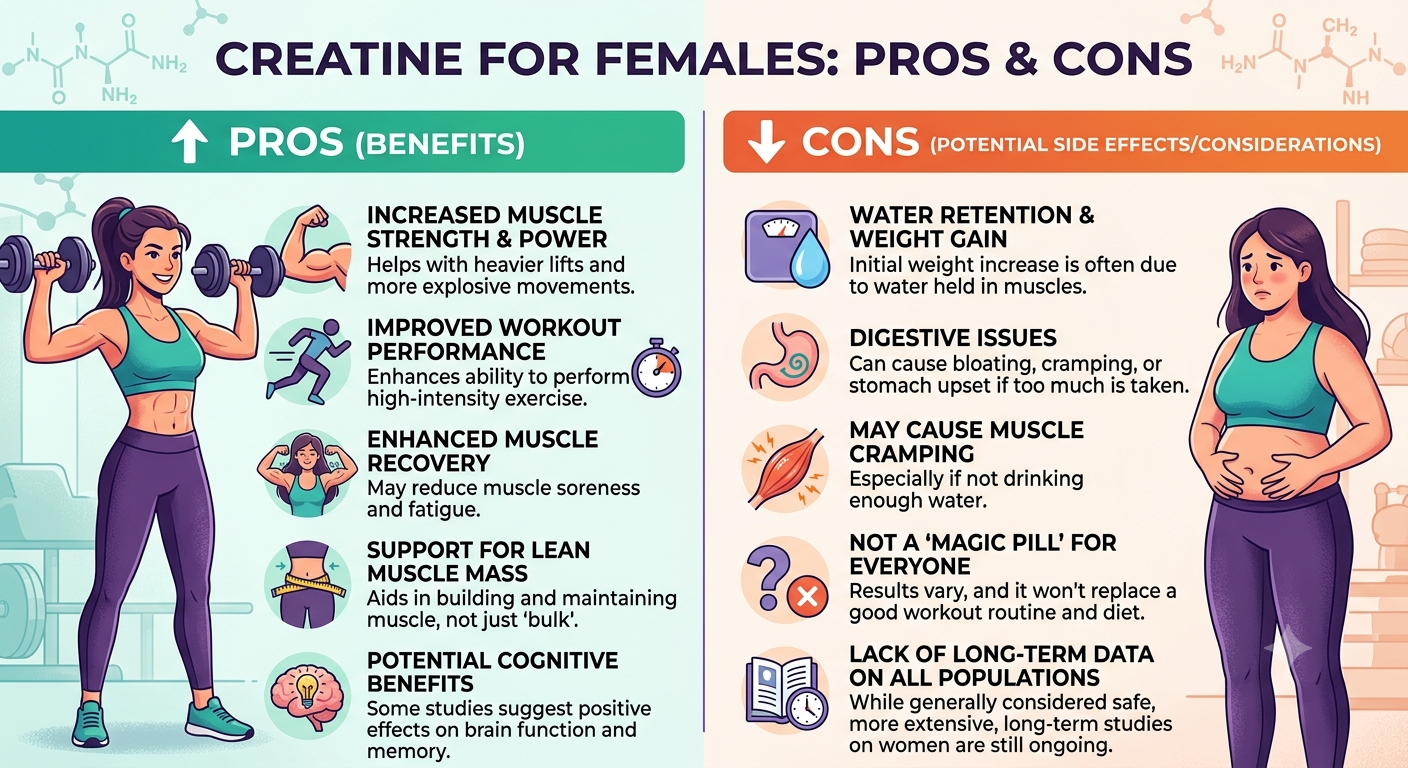
Creatine has become one of the most talked-about supplements in fitness, but many women still wonder if it is actually right for them. The pros and cons of creatine for females are worth understanding because creatine is not just for bodybuilders or men trying to gain size. It may support strength, muscle tone, workout performance, recovery, and even healthy aging, but it can also cause temporary water weight, bloating, or confusion if taken the wrong way.
Pros and Cons of Creatine for Females
Before adding creatine to your routine, it helps to look at both sides. Creatine is naturally found in the body and helps muscles produce quick energy during exercise. It is also found in foods like meat and fish, but many people do not get enough through diet alone, especially those who eat less animal protein.
For females, creatine can be useful at different stages of life, from active young women to women in midlife and beyond. Research suggests creatine supplementation may help improve strength and exercise performance in pre-menopausal females, while also being of interest during menstruation, pregnancy, postpartum, and menopause due to changes in creatine needs and metabolism.
That said, it is not a magic powder. It works best when paired with resistance training, enough protein, hydration, and consistency.
What Is Creatine?
Creatine is a compound your body makes from amino acids. Most of it is stored in your muscles as phosphocreatine. During high-intensity exercise, your body uses it to help produce ATP, which is the quick energy source your muscles rely on for short bursts of effort.
This is why creatine is commonly used for weight training, sprinting, HIIT workouts, and sports that require power. It does not directly “burn fat,” but it may help you train harder, recover better, and build or maintain lean muscle over time.
The most studied and commonly recommended type is creatine monohydrate. It is usually affordable, widely available, and backed by years of research.
Pro: Creatine May Help Improve Strength
One of the biggest benefits of creatine for women is improved strength. This does not mean you will suddenly become bulky. Instead, creatine may help your muscles perform better during challenging workouts.
For women who lift weights, do Pilates, do resistance training, or play sports, creatine may help with extra reps, better power, and improved training quality. Over time, better workouts can lead to stronger muscles and a more toned look.
Many women avoid creatine because they think it is only for men, but that is outdated. Women can benefit from stronger muscles just as much, especially for posture, metabolism, joint support, and long-term health.
Pro: It May Support Lean Muscle Tone
Creatine does not create muscle by itself. You still need training and nutrition. However, it can support the process by helping your muscles work harder during exercise.
For females trying to look more toned, creatine may be helpful because muscle tone comes from having enough lean muscle and a healthy body composition. It may also help women who are trying to maintain muscle while losing fat.
This is especially important because many women focus only on cardio and dieting. While those can have a place, strength training and muscle maintenance are key for a healthier, firmer body.
Pro: Creatine Can Help With Workout Recovery
Another possible benefit is recovery. Some women find that creatine helps them feel less drained after intense workouts. It may support repeated performance, meaning you can come back stronger for your next session.
This can be helpful for women who train several times per week or feel like their energy drops during strength workouts. When recovery improves, consistency becomes easier, and consistency is what creates real fitness progress.
Pro: It May Be Useful During Midlife and Menopause
Creatine may be especially interesting for women as they age. During midlife and menopause, women naturally face changes in muscle mass, strength, hormones, bone health, and energy levels.
While creatine is not a replacement for a healthy lifestyle, it may support muscle maintenance when combined with resistance training. This matters because maintaining muscle is important for mobility, metabolism, balance, and healthy aging.
Some research also points to possible broader benefits of creatine beyond athletics, including its role in energy metabolism and potential support for brain and muscle health. However, more research is still needed in specific populations.
Pro: Creatine Is Generally Well-Tolerated
Creatine is one of the most researched sports supplements. In healthy individuals, creatine monohydrate is generally considered safe when used appropriately. Reviews have reported few adverse effects in healthy people, even with longer-term use.
The International Society of Sports Nutrition has also stated that creatine supplementation, within established guidelines, is safe and effective.
Still, “generally safe” does not mean everyone should take it without thinking. Women with kidney disease, liver disease, medical conditions, or those who are pregnant or breastfeeding should speak with a healthcare professional before using it.
Con: Creatine May Cause Temporary Water Weight
One of the most common concerns for females is weight gain. Creatine can pull water into the muscles, which may cause the number on the scale to rise slightly. This is not the same as fat gain.
For some women, this can feel frustrating, especially if they are tracking weight closely. The body may look a little fuller, but many women also find that their muscles look firmer.
The key is to understand what is happening. A small increase in water weight does not mean creatine is making you gain body fat.
Con: Some Women May Feel Bloated
Bloating is another possible downside. It may happen if someone takes too much creatine at once, uses a loading phase, does not drink enough water, or has a sensitive stomach.
Many people do better with a simple daily dose instead of large loading doses. Taking creatine with food and drinking enough water may also help reduce stomach discomfort.
If bloating continues, lowering the dose or stopping the supplement may be the better choice.
Con: It Will Not Work Without Consistency
Creatine is not an instant transformation supplement. Some women take it for a week, do not see major changes, and assume it does not work.
In reality, creatine usually works gradually as muscle creatine stores increase. It also works best when taken consistently and paired with proper workouts.
If your sleep, protein intake, hydration, and training are poor, creatine will not fix everything. Think of it as support, not a shortcut.
Con: It May Not Be Necessary for Everyone
Not every female needs creatine. If you do not do strength training, sports, or higher-intensity exercise, you may not notice much difference.
Women who already eat a lot of meat or fish may also have higher creatine intake from food compared with vegetarians or people who eat little animal protein. That does not mean it will not help, but the results may vary.
Creatine is useful, but it is not essential for every lifestyle.
How Much Creatine Should Females Take?
A common dose is 3 to 5 grams of creatine monohydrate per day. Some protocols include a loading phase, but loading is not always necessary. Research notes that loading can increase muscle creatine stores faster, but regular daily use can also be effective over time.
For most women, starting with 3 grams per day is a simple approach. It can be taken before or after a workout, or at any time of day. The most important thing is consistency.
Creatine can be mixed with water, a smoothie, juice, or a protein shake. Choose plain creatine monohydrate if you want the simplest option.
Who Should Be Careful With Creatine?
Creatine may not be suitable for everyone. You should speak with a doctor or qualified healthcare provider before taking it if you:
Have kidney disease or reduced kidney function
Have liver disease
Are pregnant or breastfeeding
Take medications that affect the kidneys
Have a medical condition that requires supplement restrictions
Are unsure whether creatine fits your health history
Healthy women can often use creatine safely, but personal health matters. Supplements should always fit your body, goals, and medical situation.
Final Thoughts on Creatine for Women
Creatine can be a helpful supplement for women who want better strength, improved workout performance, lean muscle support, and healthy aging benefits. It is not just a “men’s gym supplement,” and it does not automatically make women bulky.
The main downsides are usually temporary water weight, possible bloating, and unrealistic expectations. It also works best when combined with strength training, good nutrition, and regular use.
Overall, the pros and cons of creatine for females show that creatine can be a smart choice for many women, especially those who train regularly or want to support muscle health. The best approach is to start with a simple dose, stay consistent, drink enough water, and speak with a healthcare professional if you have any medical concerns.















Leave a comment