

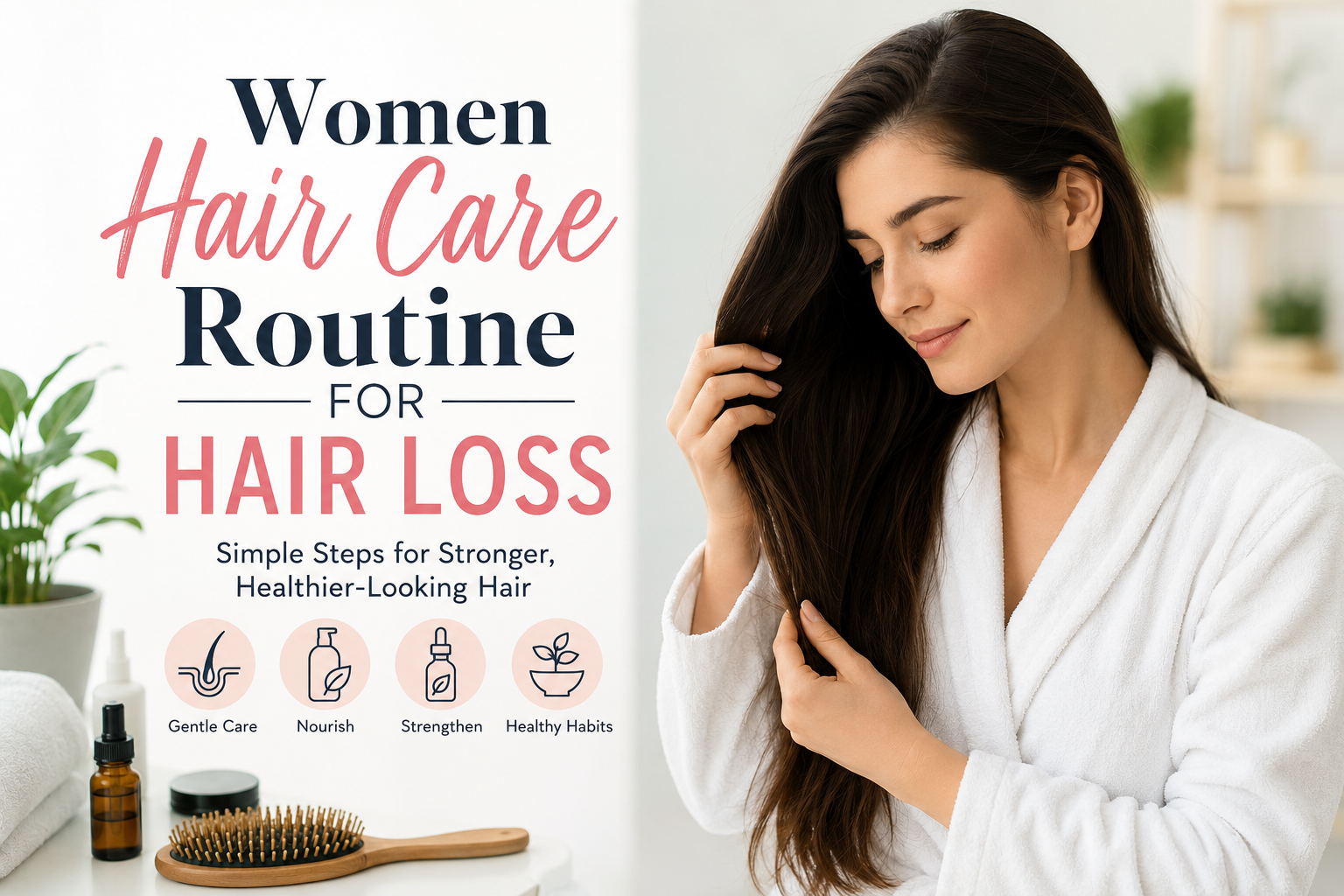
A Women hair care routine for hair loss should not be harsh, confusing, or full of unrealistic promises. Hair loss can feel stressful, especially when you start noticing extra strands on your pillow, in the shower, or on your brush. But the right routine can help protect fragile hair, reduce breakage, support scalp health, and make your hair look fuller while you understand what may be causing the shedding.
Hair loss in women can happen for many reasons, including genetics, stress, hormonal changes, illness, nutritional deficiencies, tight hairstyles, scalp conditions, or aging. According to Mayo Clinic, hair loss may be temporary or permanent depending on the cause, and treatment works best when the reason behind the hair loss is properly identified. The American Academy of Dermatology also recommends gentle washing, conditioning, and styling because thinning hair is more fragile and can be damaged easily.
This guide is not about miracle cures. It is about building a simple, consistent, and realistic hair care routine that supports your scalp and protects the hair you already have.
Understanding Hair Loss in Women
Before creating a routine, it helps to understand what kind of hair loss you may be dealing with. Not all hair loss is the same. Some women experience overall thinning, while others notice a widening part, bald patches, heavy shedding, or hair breakage around the hairline.
Cleveland Clinic explains that women may lose more than 125 hairs per day when experiencing hair loss, and this can lead to shedding, thinning, or visible bald spots. A dermatologist can help identify the cause and recommend the right treatment.
Some common types of hair loss in women include:
Female pattern hair loss: This usually appears as gradual thinning, often around the part line or crown. It can be genetic and may become more noticeable with age or hormonal changes.
Telogen effluvium: This is sudden shedding that may happen after stress, illness, childbirth, major weight loss, surgery, or emotional shock.
Traction alopecia: This happens when tight hairstyles pull on the roots for a long time. Tight ponytails, buns, braids, or extensions can weaken the hairline.
Breakage-related hair loss: Sometimes hair is not falling from the root but breaking due to heat, bleach, rough brushing, or dryness.
Medical or nutritional causes: Low iron, thyroid problems, vitamin deficiencies, hormonal imbalance, or certain medications can also contribute to hair loss.
Because there are many possible reasons, your routine should be gentle and supportive, but you should also seek professional advice if the hair loss is sudden, severe, patchy, painful, or ongoing.
Women hair care routine for hair loss: Step-by-step daily and weekly plan
A good routine should focus on three main goals: keeping the scalp clean, reducing damage, and strengthening hair habits over time. You do not need dozens of products. In fact, using too many products can irritate the scalp or weigh the hair down.
1. Start with a gentle scalp check
Your scalp is the base of healthy-looking hair. Before applying products, pay attention to how your scalp feels. Is it oily, dry, itchy, flaky, sore, or sensitive? These signs matter because scalp irritation can make hair care more difficult.
Once or twice a week, part your hair in different areas and look at your scalp. Check for redness, flakes, bumps, tenderness, or thinning patches. If you notice pain, burning, scaling, or sudden bald spots, it is better to speak to a dermatologist instead of trying random home remedies.
2. Wash your hair based on your scalp, not trends
There is no perfect washing schedule for everyone. Some women need to wash every other day because their scalp gets oily. Others can wash two or three times a week. The best schedule depends on your scalp, lifestyle, sweat, and product buildup.
Choose a mild shampoo that cleans without leaving your hair feeling stripped. If your scalp is oily, focus shampoo on the scalp, not the ends. If your hair is dry, avoid harsh clarifying shampoos too often. The American Academy of Dermatology advises washing and conditioning thinning hair gently because fragile hair can break more easily.
When washing, use your fingertips instead of nails. Massage softly in small circles. Do not scrub aggressively. Hair is weaker when wet, so rough washing can lead to unnecessary breakage.
3. Always condition the lengths and ends
Conditioner is important for women dealing with hair loss because it reduces friction, dryness, and tangling. Apply conditioner from mid-length to ends, not directly on the scalp unless the product is designed for scalp use.
Leave it on for a few minutes, then rinse gently. If your hair is very dry, curly, color-treated, or frizzy, you can use a lightweight leave-in conditioner after washing. This helps reduce breakage when brushing or styling.
Remember, conditioner does not stop medical hair loss, but it can protect the hair shaft and make your hair look smoother and fuller.
4. Dry your hair carefully
Wet hair is more fragile, so drying habits matter. Instead of rubbing your hair with a towel, gently squeeze out extra water. Use a soft microfiber towel or a cotton T-shirt to reduce friction.
Avoid brushing soaking-wet hair unless you have applied a detangling product and are using a wide-tooth comb. Start from the ends and slowly work upward. Pulling from the roots can increase breakage and make shedding feel worse.
If you use a hair dryer, keep it on a low or medium heat setting. Hold it away from your scalp and avoid drying one section for too long. Heat does not directly cause female pattern hair loss, but frequent high heat can weaken strands and cause breakage.
5. Avoid tight hairstyles
Your hairstyle can either protect your hair or damage it. Tight ponytails, sleek buns, heavy extensions, tight braids, and constant pulling can stress the roots. Over time, this may lead to traction alopecia, especially around the temples and hairline.
Choose loose hairstyles whenever possible. Use soft scrunchies instead of tight rubber bands. Change your part sometimes to avoid repeated tension in the same area. If you wear braids or extensions, make sure they are not painful or pulling at the scalp.
A good rule is simple: if a hairstyle hurts, it is too tight.
6. Limit heat styling and chemical damage
Flat irons, curling wands, blow dryers, bleach, relaxers, and frequent coloring can make hair weaker. If your hair is already thinning, damaged strands can make it look even less full.
Try to reduce heat styling to special occasions or use the lowest effective temperature. Always apply a heat protectant before using hot tools. Avoid overlapping bleach or strong chemical treatments on already processed hair.
If you color your hair, ask your stylist for gentler options and avoid drastic changes that require heavy bleaching. Healthy-looking hair often comes from reducing damage, not adding more treatments.
7. Use scalp massage gently
A gentle scalp massage may help you feel relaxed and improve product distribution. Use your fingertips and light pressure for three to five minutes. Do not scratch, pull, or rub harshly.
You can massage your scalp before washing or while shampooing. If you use oils, keep them light and avoid leaving heavy oil on the scalp for too long, especially if you are prone to dandruff, itching, or buildup.
Scalp massage should feel calming, not painful. If your scalp becomes itchy, greasy, or irritated after oils, stop using them.
8. Be careful with hair oils and DIY remedies
Many people recommend oils, onion juice, rice water, or homemade masks for hair loss. Some may make hair feel softer, but they do not fix every cause of hair loss. Hair loss caused by hormones, genetics, thyroid issues, anemia, autoimmune conditions, or scalp disease needs proper diagnosis and treatment.
Natural does not always mean safe. Lemon juice, strong essential oils, harsh scrubs, and irritating DIY mixtures can inflame the scalp. A healthy routine should not burn, sting, or cause redness.
If you want to use oil, apply a small amount to the hair lengths or use a lightweight scalp oil only if your scalp tolerates it. Patch test first.
9. Support hair from the inside
Hair care is not only about shampoo and conditioner. Your body needs enough protein, iron, zinc, vitamins, healthy fats, and overall calories to support hair growth. Crash dieting, low protein intake, and nutritional deficiencies can contribute to shedding.
Try to include protein-rich foods such as eggs, fish, chicken, lentils, beans, yogurt, nuts, or tofu. Add fruits, vegetables, whole grains, and healthy fats for overall wellness.
Do not start supplements blindly. Too much of certain vitamins can be harmful, and supplements only help if you actually have a deficiency. If you suspect low iron, vitamin D deficiency, thyroid problems, or hormonal imbalance, ask a doctor for proper testing.
10. Know when treatment may be needed
A hair care routine can reduce breakage and protect your scalp, but some types of hair loss need medical treatment. Mayo Clinic notes that treatments such as minoxidil may help certain types of hair loss, and underlying diseases or medication-related causes need to be addressed properly.
Cleveland Clinic also states that female pattern baldness may be treated with options such as medications, red light therapy, or styling techniques depending on the case.
You should consider seeing a dermatologist if:
- Your hair loss is sudden or heavy
- You see bald patches
- Your scalp is painful, itchy, red, or flaky
- Your part is getting wider
- Your hairline is thinning quickly
- You recently had illness, childbirth, surgery, or major stress
- You have irregular periods, acne, or unwanted facial hair along with hair thinning
- Hair loss continues for more than three months
The sooner you understand the cause, the better your chances of managing it.
Simple Morning Hair Care Routine
In the morning, avoid rushing through your hair care. Start by gently detangling your hair with your fingers or a wide-tooth comb. If your hair is dry, apply a small amount of leave-in conditioner or lightweight serum to the ends.
Choose a loose hairstyle that does not pull on your scalp. If your hair looks flat, use a gentle volumizing spray at the roots instead of heavy oils or thick creams. Avoid teasing your hair aggressively because backcombing can cause breakage.
If your scalp is visible, you can use a tinted scalp powder or hair fiber for temporary coverage. These do not treat hair loss, but they can help you feel more confident while you follow a long-term plan.
Simple Night Hair Care Routine
At night, remove tight hair ties and let your scalp relax. If your hair tangles easily, loosely braid it or tie it with a soft scrunchie. Sleeping on a satin or silk pillowcase may reduce friction and help prevent breakage.
Do not sleep with very wet hair if it causes tangling or breakage for you. If you wash at night, gently dry your hair until it is damp or mostly dry before sleeping.
Avoid applying too many products before bed. Heavy buildup can make the scalp itchy and greasy. Keep your routine simple and consistent.
Weekly Hair Care Routine for Thinning Hair
Once a week, take a little extra time to care for your scalp and hair lengths. Use a gentle shampoo to remove buildup. Apply a moisturizing conditioner or hair mask to the mid-lengths and ends. Detangle slowly and avoid pulling.
This is also a good time to check your hair habits. Did you use too much heat this week? Were your hairstyles too tight? Did your scalp feel irritated? Small changes every week can make your routine more effective.
You can also take monthly photos of your part line or hairline in the same lighting. This helps you track real changes instead of guessing based on daily shedding.
Common Mistakes to Avoid
One common mistake is changing products too often. Hair growth takes time, and constantly switching products can irritate your scalp or make it harder to know what is working.
Another mistake is using harsh shampoos because you think a “deep clean” will stop hair loss. Over-cleansing can make the scalp dry and the hair brittle.
Many women also ignore tight hairstyles. If you wear a tight bun every day, your hairline may suffer. Looser styles are much safer for fragile hair.
Finally, do not wait too long to get help. If hair loss is caused by a medical issue, a routine alone may not be enough.
Wrapping Up
The best Women hair care routine for hair loss is gentle, consistent, and realistic. It should focus on scalp health, careful washing, regular conditioning, low heat, loose hairstyles, good nutrition, and early professional help when needed. Hair loss can feel emotional, but you are not powerless. By protecting your hair from damage and understanding the cause of shedding, you can make better choices and support healthier-looking hair over time.













Leave a comment