

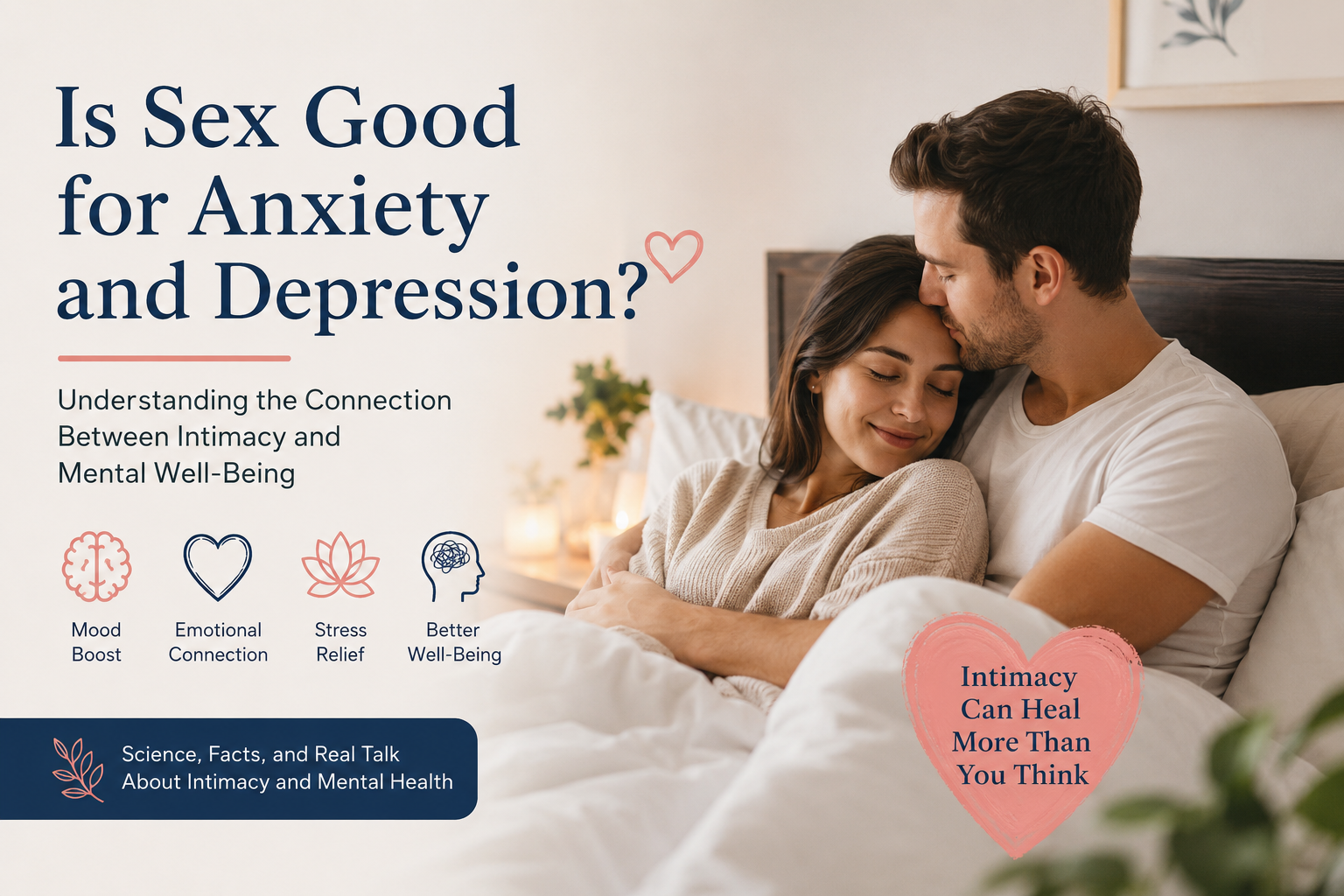
Many people quietly wonder, Is sex good for anxiety and depression? but feel awkward asking it out loud. The honest answer is: it can be helpful for some people, but it is not a cure, and it does not work the same way for everyone. Sex and intimacy can support emotional connection, reduce stress, improve mood, and help some people feel more relaxed. At the same time, anxiety and depression can also lower sexual desire, affect confidence, and make intimacy feel difficult or emotionally complicated.
Mental health is deeply personal. What feels comforting for one person may feel overwhelming for another. That is why it is important to talk about this topic in a balanced, respectful, and realistic way. Sex is not simply a physical act. It can involve trust, closeness, vulnerability, hormones, communication, self-image, relationship quality, and emotional safety. When these things are healthy, intimacy may have a positive effect on mental well-being. When they are not, sex may not feel helpful at all.
Medical sources such as Mayo Clinic and the NHS explain that depression and anxiety often need proper support, including therapy, lifestyle changes, and sometimes medication. Sex or intimacy may play a supportive role, but it should not replace professional care when symptoms are ongoing, severe, or affecting daily life.
Is Sex Good for Anxiety and Depression?
Sex may help reduce anxiety and improve mood in certain situations because it can trigger the release of feel-good chemicals in the body. During sexual activity, the brain may release endorphins, dopamine, and oxytocin. Endorphins are linked with stress relief and mood improvement, and Cleveland Clinic notes that activities like exercise, massage, eating, and sex can help boost endorphins.
Oxytocin is often connected with bonding, affection, and emotional closeness. This is one reason why intimacy with a trusted partner may help some people feel calmer, safer, and more emotionally connected. For someone dealing with anxiety, that sense of closeness may temporarily soften feelings of tension or loneliness. For someone experiencing mild depressive symptoms, loving physical connection may bring comfort, reassurance, and a small emotional lift.
However, sex is not a guaranteed solution. If someone is in an unhealthy relationship, feels pressured, lacks emotional safety, or is struggling with trauma, sex may increase stress instead of reducing it. Mental health benefits are more likely when intimacy is consensual, respectful, emotionally safe, and connected to genuine care.
How Sex May Help Reduce Stress
Anxiety often keeps the body in a state of alertness. The mind races, muscles tighten, breathing changes, and the nervous system may feel like it cannot switch off. Healthy intimacy may help the body relax by shifting attention away from stress and toward physical sensation, closeness, and connection.
Sex can also work similarly to other forms of physical activity. Mayo Clinic explains that exercise and physical activity can help ease symptoms of depression and anxiety by improving mood and reducing stress. While sex is not the same as a structured workout, it still involves physical movement, increased heart rate, and the release of mood-related chemicals.
For some people, this can lead to better sleep afterward. Since anxiety and depression often disturb sleep, any healthy activity that supports relaxation may indirectly help emotional balance. Still, the effect may be temporary. A person may feel calmer after intimacy, but if the root causes of anxiety remain untreated, the symptoms can return.
Emotional Connection Matters More Than Frequency
One common mistake people make is thinking that “more sex” automatically means better mental health. That is not true. The quality of intimacy matters much more than the number of times it happens.
A supportive, emotionally present relationship can make intimacy feel comforting and grounding. Feeling wanted, accepted, and valued can be powerful for someone who is struggling with sadness, insecurity, or worry. On the other hand, sex without emotional connection may not provide the same mental health benefit. In some cases, it may even leave a person feeling more empty, disconnected, or anxious.
The American Psychological Association highlights the importance of social support in managing stress. While this does not mean sex itself is required for stress relief, it does show that strong, supportive relationships can help people cope better emotionally.
So, when discussing intimacy and mental health, it is better to focus on connection, communication, safety, and mutual care rather than performance or frequency.
When Anxiety and Depression Affect Sexual Desire
It is also important to understand the other side of the topic. Anxiety and depression can make sex feel harder. Depression may lower energy, reduce interest in things a person used to enjoy, and affect self-worth. The NHS lists low sex drive as one of the physical symptoms that can be linked with depression.
Anxiety can also interfere with intimacy. A person may worry about their body, performance, emotional vulnerability, or whether their partner is satisfied. These thoughts can make it difficult to relax and enjoy the moment. Over time, this can create a cycle: anxiety affects intimacy, then intimacy becomes another source of anxiety.
This does not mean something is “wrong” with the person. It simply means their mind and body are under stress. Sexual desire naturally changes depending on mood, health, sleep, stress levels, hormones, relationship quality, and life circumstances.
Antidepressants and Sexual Side Effects
Some people with depression or anxiety take medication, and certain antidepressants can affect sexual desire, arousal, or orgasm. This can be frustrating, especially when the medication is helping emotionally but creating challenges sexually.
Research and medical sources note that antidepressants, especially SSRIs, may cause sexual side effects in some people. These can include reduced desire, delayed orgasm, or difficulty becoming aroused.
If this happens, it is important not to stop medication suddenly. Instead, a person should talk to a doctor. A healthcare provider may adjust the dose, suggest timing changes, consider another medication, or recommend additional support. Sexual side effects are common enough that doctors are used to discussing them, even if the patient feels embarrassed bringing them up.
Can Sex Replace Therapy or Medication?
No, sex should not be seen as a replacement for therapy, medication, or professional mental health care. It may support well-being, but it is not a treatment plan on its own.
Depression and anxiety can have many causes, including brain chemistry, trauma, chronic stress, grief, relationship issues, medical conditions, lifestyle factors, and family history. Because of this, proper care often needs a bigger approach. Mayo Clinic notes that depression is commonly treated with medication, psychotherapy, or both. The NHS also explains that depression treatment may include self-help, talking therapies, and medicines depending on the person’s needs.
Healthy intimacy can be one part of a balanced life, but it should not carry the full responsibility of healing someone’s mental health. Expecting sex to “fix” anxiety or depression can create pressure and disappointment for both partners.
The Role of Consent and Emotional Safety
Sex is only emotionally healthy when it is based on consent, respect, and comfort. If someone feels pressured to have sex to please a partner, save a relationship, or prove love, it can become emotionally harmful.
For people with anxiety or depression, emotional safety is especially important. They may already feel sensitive, overwhelmed, or unsure of themselves. A caring partner should be patient, listen without judgment, and never make the person feel guilty for having low desire or needing space.
Healthy intimacy can include more than sex. Hugging, cuddling, holding hands, kissing, gentle touch, deep conversation, or simply lying close to someone can also provide comfort. Sometimes, these softer forms of connection feel more supportive than sex itself.
What If Sex Makes You Feel Worse?
If sex leaves someone feeling sad, anxious, guilty, disconnected, or emotionally empty, that feeling deserves attention. It may be related to relationship issues, past trauma, low self-esteem, religious or cultural guilt, body image struggles, or simply not feeling emotionally safe with a partner.
This does not mean the person should ignore intimacy forever. It means they may need to slow down and understand what is happening. Talking with a therapist can be helpful, especially if these feelings happen often or are linked to painful past experiences.
A supportive partner can also make a big difference. Honest communication, reassurance, and patience can reduce pressure and rebuild trust. The goal should never be to force intimacy. The goal should be to create a safe space where both people feel respected.
Healthy Ways to Use Intimacy for Emotional Well-Being
For couples, intimacy can become a gentle way to support emotional closeness when handled with care. This starts with communication. Partners should feel able to talk about stress, desire, boundaries, and emotional needs without fear of judgment.
It may also help to remove performance pressure. Intimacy does not always need to lead to sex. Sometimes a warm hug, a slow kiss, or a quiet moment together can be enough to remind someone they are not alone.
People should also pay attention to timing. When someone is deeply exhausted, emotionally numb, or highly anxious, sex may not feel comforting. Choosing moments when both people feel relaxed and connected can make intimacy feel more natural and supportive.
Self-care matters too. Sleep, exercise, therapy, balanced meals, sunlight, journaling, and meaningful social support all play a role in mental health. Sex may be helpful, but it works best as part of a healthier overall lifestyle, not as the only coping method.
Final Thoughts
So, is sex good for anxiety and depression? It can be, but only in the right emotional context. Healthy, consensual intimacy may reduce stress, support bonding, improve mood, and help some people feel more connected. But it is not a cure, and it should never replace therapy, medication, or professional support when those are needed. The most important thing is not how often someone has sex, but whether intimacy feels safe, respectful, comforting, and emotionally healthy.














Leave a comment